Showing posts with label Films. Show all posts

25 February 2012

Samson and Delilah

FILM REVIEW
Title: Samson and Delilah
Year: 2009
Director: Warwick Thornton
Writer: Warwick Thornton
Cast: Rowan McNamara, Marissa Gibson
Running time:  minutes  
Country: Australia
Plot summary:
Samson and Delilah's world is small- an isolated community in the Central Australian desert. When tragedy strikes they turn their backs on home and embark on a journey of survival. Lost, unwanted and alone, they discover that life isn't always fair, but love never judges.
Commentaries:
The film was filmed in and around Alice Springs. Described as a "survival love story" by the director, the film depicts two indigenous Australian 14 year olds living in a remote Aboriginal community who steal a car and escape their difficult lives by going to Alice Springs. The film competed in the Un Certain Regard section at the 2009 Cannes Film Festival, winning the Caméra d'Or ('Gold Camera Award' for best first feature film) at the 2009 Cannes Film Festival. Screen Australia announced on 29 September 2009 that the film has been nominated as Australia's official entry in the Academy Awards best foreign language film category.

© Text and image: Wikipedia and IMDB

11 February 2012

Mabo

FILM REVIEW 
Title: Mabo 
Year: 2012 (In production) 
Director: Rachel Perkins 
Writer: Sue Smith 
Running time: 120 minutes   
Country: Australia 
Plot summary: 
The telemovie Mabo - is the David and Goliath story of Torres Strait Islander Eddie Koiki Mabo (1936-1992), who spearheaded the High Court challenge that once and for all overturned terra nullius - and resulted in the recognition of native title in Australia.
Eddie Mabo was shocked to discover the (Mer) Murray Island land, passed down to him over 15 generations was not legally his. So began the immense battle to get Australian law to recognise traditional land rights. The 10 year struggle came at great personal cost to Eddie and his family.
The telemovie went into production on October 24 2011 - and will air in 2012.

Mabo - an ABC TV / Blackfella Films telemovie of the true story of one man’s epic fight to change a nation, has attracted some of Australia finest actors.
- Jimi Bani (The Straits, R.A.N.) will star as Eddie Koiki Mabo,
- Deborah Mailman (Offspring, Rush, The Secret Life of Us) will play his wife Bonita,
- Colin Friels (The Eye of the Storm, Bastard Boys),
- William McInnes (East West 101, Curtin),
- Miranda Otto (The Lord Of The Rings: The Return Of The King, Cashmere Mafia, South Solitary),
- Ewen Leslie (Love My Way, Kokoda) and
- Tom Budge (Bran Nue Dae, The Pacific, East of Everything).

Mabo Day commemorates the anniversary of the 1992 High Court decision which changed Australia’s political and legal landscape. The decision reversed the notion of terra nullius (no one’s land) which had been in effect since the time of white settlement. (The idea of terra nullius meant that under British law all the land of Australia became Crown land. Aboriginal property rights were ignored as the land belonged to whomever the Crown granted or sold it to.)
Eddie Mabo’s ancestors lived for centuries on a group of three islands in the Torres Strait, near Cape York, known as the Murray Islands. The islands were annexed by the Queensland Government in 1879 and so became part of Australia. This meant that white rule was absolute and the traditional elders had little power.
Little changed, however, in the way of life of the Murray Islanders as a result of this -people continued to live in their settled communities; they maintained their traditional beliefs and customs; there was a clear way of passing on their plots of land, and ways of settling disputes about legal matters. It was into this lifestyle that Eddie Mabo was born.
Edward Koiki Mabo was born in 1936 on Mer Island (or Murray Island) and, after his mother’s death, was given to his mother’s brother and his wife to raise.
From an early age, Koiki was taught about his family’s land.
“…it was handed down from generation to generation,they knew by the boundary lines and markers. There was a certain tree, or stones, heaps of rocks, different trees. They knew exactly where the place was”.
At the age of twenty-three he married Bonita Neehow and went on to raise ten children with her.
1974 proved to be a turning point for Eddie Mabo. During a conversation about his land on Murray Island, he was told that he didn’t own that land, and that it was Crown land. His response was 'No way, it’s not theirs, it’s ours.'
As a result, he and others decided to challenge the claim of terra nullius in the High Court. Central to his argument was the belief that the land had been stolen in the first place. He believed he could achieve justice through the courts.
Eddie Mabo claimed that he was the rightful heir and owner of the land owned by his father on Murray Island.
It would take ten years, and Eddie Mabo would not live to see or hear the result, but in 1992, the High Court brought down its decision. This decision included the words:
“…the Meriam people were entitled as against the rest of the world to the possession, occupation, use and enjoyment of (most of) the land of the Murray Islands in the Torres Strait. In reaching this conclusion a majority of the Court held that the common law of Australia recognises a form of native title; where those people have maintained their connection with the land; and where the title has not been extinguished by acts of Imperial, Colonial, State, Territory or Commonwealth governments”.
In essence, the High Court recognised that Australia was occupied prior to white settlement, and that Aboriginal and Torres Strait Islander peoples had native title to these lands.
'Native title' is the term used to describe the common law rights and interests of Aboriginal and Torres Strait Islander people in land according to their traditions, laws and customs. The 1992 decision for the first time recognised the common law rights in land of Australia’s Indigenous peoples.
Native title isn’t a new type of land grant, but a common law right that predates white settlement of Australia. The common law, originally founded on custom and tradition, is the British system of judge-made law, based on precedent, and is over 800 years old.

© Text and image: Wikipedia, Anti-Discrimination Commission Queensland, Colin R.

28 January 2012

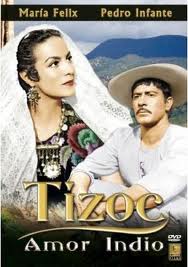
Tizoc

FILM REVIEW 
Title: Tizoc 
Year: 1957 
Director: Ismael Rodríguez 
Writer: Manuel Ojeda, Carlos Orellana 
Cast: Pedro Infante, María Félix 
Running time: 109 minutes   
Country: Mexico 
Plot summary: 
Some people subtitle this movie as Indian Love; the reason is perfectly clear. Tizoc (Pedro Infante) is an Indian who works hard while the rest of the indians envy and even hate him. One day he meets the most beautiful woman on earth, María (María Félix) so takes her as the Virgin of the local church.
The woman is member of a wealthy country-family, one of the richest of the region. However, the wealthy, beautiful and Virgin-like woman befriends the poor but hard working Indian.
One day Tizoc is hurt by another Indian. María witnesses this and gives him a white handkerchief to wipe his blood. ¡Alas! The man goes crazy. In fact she ignores that to offer a white handkerchief to an Indian of this region means to accept him as the husband.
Now Tizoc works harder to build the house where he and María should come to live. No matter what, Tizoc won't listen to anybody, not even the local priest: he is convinced that María wants to be his wife.
After a few days he comes to believe that María has made a fool of him. So, angry, he kidnaps her and takes her to a mountain. Even the Army comes after him to rescue the wealthy woman, but also the other indians who hate Tizoc.
In captivity María talks to Tizoc and he realizes his misunderstanding. So he lets her go free. But then one of the other indians, trying to kill Tizoc, shoots her an arrow to kill her. The saddest Tizoc takes out the arrow from her breast and plunges it into his own chest.
Perhaps the most famous passage of this movie is when Tizoc sings her Te quiero más que a mis ojos. Te quiero más que a mis ojos. Pero quiero más a mis ojos Pero quiero más a mis ojos porque mis ojos te vieron (I love you more than my eyes, I love you more than my eyes. But I love more my eyes, but I love more my eyes because my eyes saw you)
Moved, she begins to weep. Then, when he realizes that she's crying, with a rock hits the mouth that has made her cry.
On April, 15th, 1957 Pedro Infante died on a plane crash. However, months later his character as Tizoc got him the Berlin's Silver Bear for Best Actor (while Twelve Angry Men got the Golden Bear)

© Text and image: Wikipedia and IMDB


14 January 2012

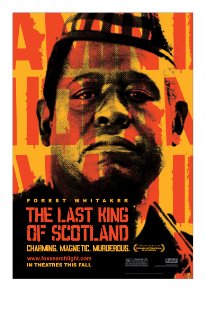
The Last King of Scotland

The Last King of Scotland, Ethnikka blog for cultural knowledge
FILM REVIEW
Title: The Last King of Scotland
Year: 2006
Director: Kevin Macdonald
Writer: Peter Morgan, Jeremy Brock, Giles Foden
Running time: 121 minutes  
Country: UK
Plot summary:
In an incredible twist of fate, a Scottish doctor (James McAvoy) on a Ugandan medical mission becomes irreversibly entangled with one of the world's most barbaric figures: Idi Amin (Forest Whitaker). Impressed by Dr. Garrigan's brazen attitude in a moment of crisis, the newly self-appointed Ugandan President Amin hand picks him as his personal physician and closest confidante. Though Garrigan is at first flattered and fascinated by his new position, he soon awakens to Amin's savagery - and his own complicity in it. Horror and betrayal ensue as Garrigan tries to right his wrongs and escape Uganda alive.

© Text and image: Wikipedia and IMDB

31 December 2011

Rough Magic

FILM REVIEW 
Title: Rough Magic 
Year: 1995 
Director: Clare Peploe 
Writer: James Hadley Chase, Robert Mundi, William Brookfield, Clare Peploe 
Running time: 100 minutes   
Country: USA 
Plot summary: 
Set in the 1950s, Rough Magic tells the story of what happens when a pretty apprentice magician goes to Mexico to escape her fiancé, a wealthy politician, and to find a Mayan shaman who will teach her ancient principles of magic. She is being trailed by a detective hired by her fiancé. He's a former photojournalist traumatized by what he saw in Hiroshima. The photojournalist joins her in the search for the Mayan shaman, and falls in love with her; the feeling is not reciprocated. When she finds the shaman, she drinks a potion which empowers her to do magic. The potion has life-changing effects on her and her relationship with her companion. They have strange experiences which are brought about by magic. 

© Text and image: Wikipedia and IMDB 

17 December 2011

Hotel Rwanda

FILM REVIEW 
Title: Hotel Rwanda 
Year: 2004 
Director: Terry George 
Writer: Keir Pearson and Terry George 
Running time: 121 minutes   
Country: USA, UK, Italy, South Africa 
Plot summary: 
The true-life story of Paul Rusesabagina, a hotel manager who housed over a thousand Tutsi refugees during their struggle against the Hutu militia in Rwanda. Ten years ago some of the worst atrocities in the history of mankind took place in the country of Rwanda--and in an era of high-speed communication and round the clock news, the events went almost unnoticed by the rest of the world. In only three months, one million people were brutally murdered. In the face of these unspeakable actions, inspired by his love for his family, an ordinary man summons extraordinary courage to save the lives of over a thousand helpless refugees, by granting them shelter in the hotel he manages.

© Text and image: Wikipedia and IMDB

3 December 2011

N'Diangane

FILM REVIEW 
Title: N'Diangane 
Year: 1974 
Director: Mahama Traoré 
Writer: Mahama Traoré 
Running time: 100 minutes   
Country: Senegal, France 
Plot summary:
Mame is six years old child, living happily at home with his parents and playing in the fields, forests and nearby rivers with friends. Loved and well fed, he leads an idyllic life. In one fateful decision, all that changes.

© Text and image: Wikipedia and IMDB

19 November 2011

Komal Gandhar

Komal Gandhar film review, Ethnikka blog for cultural knowledge
FILM REVIEW
Title: Komal Gandhar (A Soft Note on a Sharp Scale)
Year: 1961
Director: Ritwik Ghatak
Writer: Rabindranath Tagore, Ritwik Ghatak
Running time: 134 minutes  
Country: India
Plot summary:
Komal Gandhar (English title: A Soft Note on a Sharp Scale; literally: E-flat) is a 1961 Bengali film written and directed by noted film maker Ritwik Ghatak. It was part of the trilogy, Meghe Dhaka Tara (1960), Komal Gandhar, and Subarnarekha (1962), all dealing with the aftermath of the Partition of India in 1947 and the refugees coping with it, though this was the most optimistic film of his oeuvre. The film explores three themes juxtaposed in the narrative, the dilemma of Anusuya, the lead character, divided leadership of IPTA and the fallout of the partition of India.
The title was taken from the line of a poem by Rabindranath Tagore that meant a sur or note, E-flat. As in other films by Ghatak, music plays a pivotal role in the movie.
Through the microcosmic perspectivising of a group of devoted and uncompromising IPTA workers, Ghatak with his signature style touches on varied issues of partition, idealism, corruption, the interdependence of art and life, the scope of art, and class-struggle. Unlike his other films, this one runs along an upbeat mood with the lead pair of lovers (Bhrigu and Anusuya) being reunited.

© Text and image: Wikipedia and IMDB

5 November 2011

Mead Film Festival 2011

Name: 35th Margaret Mead Film Festival
Dates: 10th to 13th November 2011
Entrance fee: Ticket fees per film
Place: Entrance for screenings is on 77th Street between Central Park West and Columbus Avenue, New York
Commentary:
The Mead showcases the best in non-narrative filmmaking, encompassing a broad spectrum of work including international documentaries, experimental films, animation, hybrid works, and more.
The Festival presents documentaries that increase our understanding of the complexity and diversity of the peoples and cultures that populate our planet.
The Margaret Mead Film Festival is the longest-running, premiere showcase for international documentaries in the United States, encompassing a broad spectrum of work, from indigenous community media to experimental nonfiction. The Festival is distinguished by its outstanding selection of titles, which tackle diverse and challenging subjects, representing a range of issues and perspectives, and by the forums for discussion with filmmakers and speakers.

Opening Night with Grande Hotel (directed by Lotte Stoops)
The Grande Hotel in the East African seaside town of Beira, Mozambique, was once the most opulent resort on the continent. Now, it is home to an estimated 3,000 squatters. Living in this shell of former luxury, those on the margins of society create a self-enclosed community as the place they call home crumbles around them. As one voice in the film says, the history of the hotel is the history of the country itself.


About the Mead Film Festival:


24 September 2011

Guelwaar

Guelwaar film review, by Ousmane Sembene, Ethnikka blog for cultural knowledge
FILM REVIEW 
Title: Guelwaar 
Year: 1992 
Director: Ousmane Sembène 
Writer: Ousmane Sembène 
Running time: 115 minutes   
Country: Senegal 
Plot summary:
Burial of a Christian political activist in a Muslim cemetery forces a conflict imbued with religious fervor. A satiric portrayal of religion and politics, sometimes humorous, sometimes deadly serious.
Guelwaar is a very accessible introduction to the often difficult delights of African cinema. Like Kurosawa and Satyajit Ray, Sembene has often been patronised as a non-Western director making films for Western audiences. And certainly, the film is full of elaborate, didactic speeches - about military, police and civic corruption; first world imperialism etc. - that play like lectures to the uninformed, and would presumably seem like statements of the obvious to indigenous viewers.
Unlike many African films, which are driven by myth, imagery, allegory, or the tropes of oral culture, 'Guelwaar' is reassuringly structured in a way familiar to Westerners. As in a film by Costa-Gavras, a detective story plot is used to uncover wider truths about the country's social and political framework.
There are three interrelated detective stories in the film: where is the missing corpse of the title hero (which translates as 'The Noble One'), a revered dissident fomenting opposition to local corruption and first world neo-imperialism?; how did Guelwaar die - if he was killed, who murdered him?; who was Guelwaar the man anyway?
As in Costa-Gavras, the film's initial focus on the local immediately implicates the national. The first detective story - about the corpse - reveals the deep religious hostilities in the country. Guelwaar was a Christian in a largely Muslim society; when it's discovered that his body was, due to an administrative blunder (a mordantly cynical piece of satire), buried in an Islamic graveyard, the dead Muslim's people refuse to 'desecrate' the cemetery, and return the body.
Most of the movie is taken up with the stand-off of the two peoples in which blind intransigence quickly gives way to a violence which is only neutered when the army are called in. It is unclear whether this is a justification for military visibility - the chief policeman is one of the few sane, non-corrupt characters in the film. Much is made of the irony that each clan proclaims the authenticity of a religion originating thousands of miles away.
The second detective story - who killed Guelwaar - again takes the narrative away from the local. It is clear that Guelwaar was a threat to local and international interests, both politically and religiously - at a ceremony celebrating the receipt of foreign aid, he delivers an incendiary speech denouncing his country's craven dependence on others. It is hard to disagree - none of the strong men in the area seem to do any work, the lands remain unharvested; civic dignitaries line their pockets, and their daughters become bread-winning prostitutes at a socially convenient distance. This is a pleasant, anti-Catch-22 state of affairs - the first world retain virtual power after colonialism; the locals get rich. Guelwaar is in serious danger of disrupting it. He has to be wiped out.
This is all very instructive in an educational kind of way, but would be rather dull as film drama in itself. There is a real thrill (and a kind of horror) when the foreign aid van is seized, its supplies sabotaged and trod on, but agit-prop as hagiography can be rather unpalatable. The third detective story complicates this. Who was Guelwaar? He was certainly an inspiring, charismatic, articulate leader. But he was also a bullying patriarch who diminished his wife and was quite content for his daughter to whore herself for his dinner.
Unlike most political films, which can be very macho, Sembene records female experience in such a society, in which rigid social and religious rules keep women at home while their men fornicate freely. Although the film ends with Guelwaar the heroic, the progression of the four flashbacks is more difficult. The first suggests his involvement in thuggish political violence. The second shows his contempt for his wife and family responsibilities. The third shows his taste for 'freedom' was more sexual than political. Only in the fourth do we get any idea of Guelwaar's nominal nobility, by which time our taste for rhetoric, as opposed to action, has worn thin. Surely the idea that two peoples, adhering to foreign religions, and fighting over a corpse, is irony enough.
So far, so Western. This narrative has other familiar trajectories - the uniting of a scattered family; the power and role of language, colonial and local; the transformation of a Western-educated son into a Senegalese patriot. The satire of bureaucracy and corruption can be very funny. The great pleasure of 'Guelwaar', however, are its digressions from the narrative, when it slows down to record a way of life, even in extremis; the mish mash of rites (tribal, Christian/Islamic); the colourful clothes and murals, the music.

© Text and image: Wikipedia and Alice Liddel


27 August 2011

Madame Brouette

FILM REVIEW
Title: L’extraordinaire destin de Madame Brouette
Year: 2002
Director: Moussa Sene Absa
Writer: Moussa Sene Absa
Running time: 104 minutes  
Country: Senegal
Plot summary:
A murder investigation frames the background for narrating the story of Madame Brouette (Rokhaya Niang) - a strong woman, who is dedicated to make a living for herself and her daughter in some poor neighbourhood in Dakar, Senegal. Flash-backs are developing the events which lead to the murder of the police man Naago, who was also her boyfriend and lover. Neighbours comment on her life and her good character - did she really murder Naago or was it maybe "London Pipe", a crook and local gangster? Director Moussa Sene Absa used first time actors (e.g. Naago is played by Aboubacar Sadikh Ba, a school teacher), but they all are playing their part very well. Absa likes to give his movies a specific color - which are yellow and orange in this film - and uses it to increase the beauty of the natural settings. Even though "Inspector Colombo" is only a funny & incapable character in this film, pace and storyline of "Madame Brouette" also remind of the famous detective series. On another thought, famous Senegalese filmmaker Ousmane Sembene used a similar style of telling the life of the main character in flashbacks in his movie "Guelwaar".

© Text and image: Wikipedia and IMDB

13 August 2011

7th Indigenous Cinema and Video Festival of Morelia

Name: 7th Indigenous Cinema and Video Festival of Morelia
Dates: 27th august – 4th September 2011
Entrance fee: free
Place: Teatro José Rubén Romero, Morelia, Michoacán (Mexico)
Webpage: www.fecvi.com
Commentary:
This is the seventh year that the indigenous and video festival for the indigenous tribes of Mexico is held in Morelia, Michoacán.
This year, the films that will compete for the prize are:

1.        Lebenswelt de Elias Brossoise
2.        ¿Zirahuén, un lago en vía de extinción? de Dominique Jonard
3.        La dignidad maya, la rebelión indígena de 1847 de Francisco Alejandro May Esquivel
4.        La epopeya de la princesa 6 mono y el gran guerrero 8 venado de Victor Hugo Ruíz Ortíz
5.        Me parezco tanto a tí de Luna Maran
6.        Jotooky Pesteemple, Jaraneros Mixes de Guichicovi, Oaxaca de Yovegami Ascona Mora
7.        Pichátaro-Tsiri: Historia de San Francisco Pichátaro y sus maíces de Omar Ignacio Muñoz Rivera
8.        Voces de Hoy de María Dolores Arias Martínez
9.        Takeikna, La última fiesta de un Kumiai de César Abraham Solano y Fernando de la Rosa Monroy
10.     Shukuin-Sukuin: Historia de creación de Jaime Enrique Delfín Villafuerte
11.     Tres hilos para bordar de Yuli Rodríguez
12.     Los presagios funestos de Victor Hugo Izquierdo Martínez
13.     El diablo, la lanza y el tambor de Sabdyel Almazán y Omar Flores Sarabia

2 July 2011

Secrets of the Tribe

Secrets of the Tribe
FILM REVIEW 
Title: Secrets of the Tribe 
Director: José Padilha 
Writer: José Padilha 
Year: 2010 
Running time: 110 minutes 
Country: UK, Brazil 
Plot summary: 
The field of anthropology goes under the magnifying glass in this fiery investigation of the seminal research on Yanomami Indians. In the 1960s and '70s, a steady stream of anthropologists filed into the Amazon Basin to observe this "virgin" society untouched by modern life. Thirty years later, the events surrounding this infiltration have become a scandalous tale of academic ethics and infighting.

Secrets of the Tribe is a film by director José Padilha premiered at the 2010 Sundance Film Festival to critical acclaim. This documentary explores the allegations, first brought to light in the book Darkness in El Dorado, that anthropologists studying the Yanomami Indians in the 1960s and 70s engaged in bizarre and inappropriate interactions with the tribe, including sexual and medical violations. The film was nominated for a Grand Jury Prize.

© Text and image: IMDB

18 June 2011

Herdsmen of the sun

Title: Herdsmen of the sun
Director: Werner Herzog
Writer: Werner Herzog
Year: 1989
Running time: 43 minutes
Country: Germany
Plot summary:
Wodaabe - Herdsmen of the Sun (German: Wodaabe - Die Hirten der Sonne) is a 1989 documentary film by Werner Herzog. The film explores the social rituals and cultural celebrations of the Saharan nomadic Wodaabe tribe. Particular focus is given to the Gerewol celebration, which features an elaborate male beauty contest to win wives.
Although the film may be considered to be ethnographic, Herzog commented that: "[My films] are anthropological only in as much as they try to explore the human condition at this particular time on this planet. I do not make films using images only of clouds and trees, I work with human beings because the way they function in different cultural groups interests me. If that makes me an anthropologist then so be it."
The opening shots of the film depicts a celebration of male beauty, showing men dancing in elaborate costume, accentuating their height and whites of their eyes and teeth to attract women, as "Ave Maria" plays in the background (a 1901 recording sung by Alessandro Moreschi, the last castrato of the Vatican).

© Text and image: IMDB

4 June 2011

Kirikou et la sorcière

Title: Kirikou et la sorcière (Kirikou and the sorceress)
Director: Michel Ocelot
Writer: Michel Ocelot
Year: 1998
Running time: 74 minutes
Country: France
Plot summary:
In a little village somewhere in West Africa, a boy named Kirikou is born in a spectacular way. But he's not a normal boy, because he can speak and walk immediately after being born. He is also very determined. His mother tells him that an evil sorceress has dried up their spring and devoured all the males of the village except for one. Hence the tiny Kirikou decides to accompany the last warrior, his uncle, to visit the sorceress. Kirikou tricks the sorceress and saves his uncle. He saves the children from being kidnapped by the sorceress's boat and saves them later again from the sorceress's tree. Next, he bursts the monster who was drinking all the village's water. He then travels to ask his wise old grandfather about the sorceress, and faces many obstacles in the process. The grandfather finds that Kirikou is always asking questions, which is a good thing. The grandfather tells him that she is evil because she suffers: bad men put a poisoned thorn in her back. Kirikou manages to trick the sorceress and removes the thorn. The sorceress is cured. She kisses Kirikou and he becomes an adult. Love reigns.

© Text and image: Wikipedia

21 May 2011

La vie sur terre

FILM REVIEW
Title: La vie sur terre (Life on Earth)
Director: Abderrahmane Sissako
Writer: Abderrahmane Sissako
Year: 1998
Running time: 61 minutes
Country: Mauritania
Plot summary:
In the last days of 1999, after a few shots of a French supermarket, abundant in food and color, we hear Dramane compose a letter home to his father in Mali whom he then visits in the village of Sokolo. He meets the lovely Nana, and there are possibilities. People place long-distance calls from the post office. "Reaching people," says the postmaster, "is a matter of luck." Contrasts between Paris and Sokolo - between Mali and France and between Africa and Europe - are underscored by voice-over poems and comments by Aimé Césaire. A man dictates a letter to a brother in France: what is the nature of their hardships? People look for their place on this earth.

© Text: IMDB


Watch images of the film with music from Salif Keita's Folon.

7 May 2011

Emitaï

Title: Emitaï
Director: Ousmane Sembene
Writer: Ousmane Sembene
Year: 1971
Running time: 103 minutes
Country: Senegal
Plot summary:
As World War II is going on in Europe, a conflict arises between the French and the Diola-speaking tribe of Africa, prompting the village women to organize their men to sit beneath a tree to pray.
Based on a real incident, Emitai dramatizes the tension between West African villagers and French soldiers during the early days of World War II. The Vichy government sends troops to round up young African men to fight as soldiers. The people in a Diola village in Casamance resist, leading to a conflict over rice supplies that escalates into tragedy. The film was considered objectionable in many quarters in France and the final image was censored there. Because the film honestly portrays the complicity of some Africans in their own oppression, it was also banned in Senegal and other parts of Africa.

© Text: IMDB

Watch the film in: http://youtu.be/7ppN-Fkmr7A

23 April 2011

Lagaan

Title: Lagaan (Once upon a time in India)
Director: Ashutosh Gowariker
Writer: Ashutosh Gowariker
Year: 2001
Running time: 224 minutes
Country: India
Plot summary:
This is the story about the resilience shown by the Indians when they were under the British Rule. They are already taxed to the bone by the British and their cronies, but when Jack Russell announces that he will double the Lagaan (tax) from all villagers, they decide to oppose it. Leading the villagers is a handsome young man named Bhuvan, who challenges them to a game of cricket, a game that is to be played by veteran British cricket players, versus villagers, including Bhuvan himself, who have never played this game before, and do not even know a bat from a piece of wood. As the challenge is accepted, the interest grows and attracts Indians from all over the region, as well as the British from all over the country - as everyone gathers to see the 'fair play' that the British will display against their counter-parts, who are aided by none other than the sister of Captain Rusell, Elizabeth.

© Text: IMDB

9 April 2011

Rêves de poussière

Title: Rêves de poussière (Dreams of Dust)
Director: Laurent Salgues
Writer: Laurent Salgues
Year: 2006
Running time:  83 minutes
Country: Burkina Faso
Plot summary:
Mocktar Dicko, a Nigerian peasant, comes looking for work in Essekane, a gold mine in Northeast Burkina Faso. In this cage made of wind and dust, he hopes to forget the past that haunts him. He becomes friend with his boss and his colleagues and with a prostitute Tabassa and a young widow, Coumba, who dreams about sending her daughter to Denmark, where her uncle lives. While becoming familiar with his new life, Mocktar Dicko starts to loose his roots. The day he discover a piece of gold, decides not to go home and offers the money earned by selling the gold to Coumba.

Some critics:
Jugu Abraham - 13th International Film Festival of Kerala, Festival Reports, Highlights, Featured - 16 décembre 2008 (dearcinema.com)
Dreams of Dust was important for me as it showed the competence of a talented director making a debut with his own script. Director Laurent Salgues was so impressive with this film that a particular shot of a woman seen through a cascade of water elicited a spontaneous clapping from the knowledgeable audience. The film is a story of Nigerien (from Niger, not Nigeria) gold prospector seeking gold in neighboring country Burkina Faso. One would think this is "Blood Diamond" revisited. Towards the final half hour of the film, the story evolves from mere "sweat-and-blood' tale of an expatriate into a metaphysical, psychological tale with visuals that remind of Kubrick's visual metaphors. The film won attention at Sundance and I can see several reasons for it. The film presents the nobility and elegance of African men and women, rarely seen on cinema. I can probably appreciate the film better because I have visited rural areas of the two countries indirectly discussed. I strongly recommend this film for its direction, its allegorical script, the fine performances and last, but not least, the superb camerawork of Crystel Fournier. It ought to be in the run for all the three major awards at IIFK.

John Nein - Sundance Film Festival - January 18-28, 2007
The characters in Laurent Salgues's entrancing debut feature occupy both a literal and figurative netherworld. Pulling amazing textures from the windswept wasteland, his widescreen images are hypnotic. But it's the camera's evocation of people that is most striking. Salgues is more interested in showing us inner landscapes -- and the dignity of these souls that seem to erode before us. For the rest, it's cruel irony that they are so close to gold but so far from happiness.
In an amazingly stoic performance, Makena Diop conveys an entire journey of self-discovery. We have only a vague sense of Mocktar's wounds, but it's clear that riches will not salve them.