Showing posts with label Africa. Show all posts

20 March 2012

Lempertz Tribal Art Auction

Auction: Lempertz Tribal Art Auction
Date: 31st March 2012
Preview: 27 and 30 March 2012
Place: Lempertz, rue aux Laines 1, Wolstraat, 1000 Brussels, (Belgium)
Contact:  Christine de Schaetzen and Victor Teodorescu
email: brussel@lempertz.com
Comments:
Lempertz is one of the leading auction houses in Europe and the eldest in family posession. The history of the company reaches back to the beginning of the 19th century. In 1802, Johann Matthias Heberle established the „Antiquargeschäft mit Auktionsanstalt (Antiquarian Book Shop including Auctions)" that held important auctions of rare books and art works. After the death of the founder in 1840, his employee Heinrich Lempertz, at that time 24 years old, took over the company that was than renamed „J. M. Heberle (H. Lempertz)“
On 5 September 1844, the administration of the City of Cologne granted the concession to establish a branch in Bonn that was managed by Mathias Lempertz, brother of Heinrich Lempertz. On 18 November 1844, the first Lempertz auction was held in Bonn. From April 1845 Lempertz resided in a house in Fürstenstrasse 2 in which the widow of Friedrich Schiller had died in 1826. The auction of the important library of August Wilhelm Schlegel in 1845 established the company´s reputation, followed by the auction of the estates of E. M. Arndt (1860) and B. Hundshagen (1867) with a manuscript of the Nibelungen from the early 15th Century that was acquired by the Royal Library in Berlin.
Peter Hanstein buys the respected firm in 1875 and gradually moves the auction business to Cologne. In 1918 the building at Neumarkt is purchased. The classicist building is destroyed by bombs in 1943, like most of Cologne’s inner city. After the monetary reform Lempertz succeeds once more in establishing itself as the leading German art and auction house. A visible sign of this is the building at Neumarkt, completed in 1952, listed today in the Register of Historic Buildings. The Roman-Germanic Museum and the Wallraf-Richartz-Museum organize their first exhibitions here between 1953-1957. In 1965 the Gallery Lempertz Contempora is founded, an exhibition forum for contemporary art. In 1984 Lempertz complements its range by buying into the antique book store Venator. The name is changed to Venator & Hanstein.
Since the beginning of 2000, Kunsthaus Lempertz is the only German auction house to be part of the renowned International Auctioneers group (IA), a group that unites eight independent leading auction houses from eight countries.

© Photo and text: Lempertz

18 January 2012

Laurens Jan van der Post

ANTHROPOLOGISTS OF THE WORLD 
Laurens Jan van der Post (1906 - 1996) 
Sir Laurens Jan van der Post, CBE (December 13, 1906 – December 16, 1996) was a 20th century Afrikaner author of many books, farmer, war hero, political adviser to British heads of government, close friend of Prince Charles, godfather of Prince William, educator, journalist, humanitarian, philosopher, explorer, anthropologist and conservationist.
Van der Post was born in the small town of Philippolis in the Orange River Colony, the post-Boer War British name for what had previously been the Afrikaner Orange Free State in what is today South Africa. His father, Christiaan Willem Hendrik van der Post (1856–1914), of Dutch origin, had arrived in South Africa at the age of three and had married van der Post's mother in 1889.
He spent his early childhood years on the family farm, and acquired a taste for reading from his father's extensive library, which included Homer and Shakespeare. His father died in August 1914. In 1918 van der Post went to school at Grey College in Bloemfontein. There, he wrote, it was a great shock to him that he was "being educated into something which destroyed the sense of common humanity I shared with the black people". In 1925 he took his first job as a reporter in training at The Natal Advertiser in Durban. In 1926 he and two other rebellious writers, Roy Campbell and William Plomer, published a satirical magazine called Voorslag (English: whip lash) which promoted a more racially integrated South Africa; it lasted for three issues before being forced to shut down because of its radical views. Later that year he took off for three months with Plomer and sailed to Tokyo and back on a Japanese freighter, the Canada Maru, an experience which produced books by both authors later in life.
In 1927 Van der Post met Marjorie Edith Wendt (d. 1995), daughter of the founder and conductor of the Cape Town Orchestra. They traveled to England and on March 8, 1928, married at Bridport, Dorset. A son was born soon after on December 26, named Jan Laurens (later known as John). In 1929 van der Post returned to South Africa to work for the Cape Times, a newspaper in Cape Town. He began to associate with bohemians and intellectuals who were opposed to James Hertzog (Prime Minister) and the white South African policy. In an article entitled 'South Africa in the Melting Pot', which clarified his views of the South Africa racial problem, he said "The white South African has never consciously believed that the native should ever become his equal."
In 1931 he returned to England and formed friendships with members of the Bloomsbury group including Arthur Waley, J. M. Keynes, E. M. Forster and Virginia Woolf. Virginia and her husband Leonard Woolf were publishers, and had previously published William Plomer's works, and it was through Plomer's connections that van der Post gained introduction to the Woolfs and the Bloomsbury Set.
In 1934 the Woolfs published van der Post's first novel under the Hogarth Press label. Called In a Province, it portrayed the tragic consequences of a racially and ideologically divided South Africa. Later that year he decided to become a dairy farmer and bought a farm called Colley Farm, near Tetbury, Gloucestershire. There he divided his time between the needs of the cows and occasional visits to London where he was a correspondent to South African newspapers. He considered this a directionless phase in his life which mirrored Europe's slow drift to war. In 1936 he made five trips to South Africa and during one trip he met and fell in love with Ingaret Giffard (d. 1997), an English actress and author five years his senior. Later that year his wife Marjorie gave birth to a second child, a daughter named Lucia, and in 1938 he sent his family back to South Africa. When the Second World War started in 1939 he found himself torn between England and South Africa, his new love and his family; his career was at a dead end, and he was in depressed spirits, often drinking heavily.
In May 1940, van der Post volunteered for the British Army and upon completion of officer training in January 1941 he was sent to East Africa in the Intelligence Corps as a Captain. There he took up with General Wingate's Gideon Force which was tasked with restoring the Emperor Haile Selassie to his throne in Abyssinia. His unit led 11,000 camels through difficult mountain terrain and he was remembered for being an excellent caretaker of the animals. In March he came down with malaria and was sent to Palestine to recover.
In early 1942, as Japanese forces invaded South East Asia, van der Post was transferred to Allied forces in the Dutch East Indies (Indonesia), because of his Dutch language skills. By his own statement, he was given command of Special Mission 43, the purpose of which was to organise the covert evacuation of as many Allied personnel as possible, after the surrender of Java.
On April 20, 1942, he surrendered to the Japanese. He was taken to prison-camps first at Sukabumi and then to Bandung. Van der Post was famous for his work in maintaining the morale of prisoners of many different nationalities. Along with others, he organised a "camp university" with courses from basic literacy to degree-standard ancient history, and he also organized a camp farm to supplement nutritional needs. He could also speak some basic Japanese, which helped him greatly. He wrote about his prison experiences in A Bar of Shadow (1954), The Seed and the Sower (1963) and The Night of the New Moon (1970). Japanese film director Nagisa Oshima based his film Merry Christmas, Mr. Lawrence (1982) on the last two of these books.
Following the surrender of Japan, while his fellow POWs were repatriated, van der Post chose to remain in Java, and on September 15, 1945, he joined Admiral William Patterson on HMS Cumberland for the official surrender of the Japanese in Java to British forces representing the Allies.
Van der Post then spent two years helping to mediate between Indonesian nationalists and members of the Dutch Colonial Government. He had gained trust with the nationalist leaders such as Mohammad Hatta and Ahmed Sukarno and warned both Prime Minister Clement Attlee and the Allied Supreme Commander in South East Asia, Admiral Lord Louis Mountbatten, whom he met in London in October 1945, that the country was on the verge of blowing up. Van der Post went to The Hague to repeat his warning directly to the Dutch cabinet. In November 1946, British forces withdrew and Van der Post became military attaché to the British consulate in Batavia. By 1947, after he had returned to England, the Indonesian Revolution had begun. The events of these post-war years in Java are examined in his memoir The Admiral's Baby (1996).
That same year, Van der Post retired from the army and was made a CBE.

His works
With the war over and his business with the army concluded, van der Post returned to South Africa in late 1947 to work at the Natal Daily News, but with the election victory of the National Party and the onset of apartheid he came back to London. He was later to publish a critique of apartheid (The Dark Eye in Africa, 1955), basing many of his insights on his developing interest in psychology. In May 1949 he was commissioned by the Colonial Development Corporation (CDC) to "assess the livestock capacities of the uninhabited Nyika and Mulanje plateaux of Nyasaland".
Around this time he divorced Marjorie, and on October 13, 1949, married Ingaret Giffard. He went on a honeymoon with Ingaret to Switzerland, where his new wife introduced him to Carl Jung. Jung was to have probably a greater influence upon him than anybody else, and he later said that he had never met anyone of Jung's stature. He continued to work on a travel book about his Nyasaland adventures called Venture to the Interior, which became an immediate best-seller in the US and Europe on its publication in 1952.
In 1950 Lord Reith (head of the CDC) asked van der Post to head an expedition to Bechuanaland, to see the potential of the remote Kalahari Desert for cattle ranching. There van der Post for the first time met the hunter-gatherer bush people known as San. He repeated the journey to the Kalahari in 1952. In 1953 he published his third book, The Face Beside the Fire, a semi-autobiographical novel about a psychologically "lost" artist in search of his soul and soul-mate, which clearly shows Jung's influence on his thinking and writing.
Flamingo Feather (1955) was an anti-communist novel in the guise of a Buchanesque adventure story, about a Soviet plot to take over South Africa. It sold very well. Alfred Hitchcock planned to film the book, but lost support from South African authorities and gave up the idea.
In 1955 the BBC commissioned van der Post to return to the Kalahari in search of the bushmen, a journey that turned into a very popular six-part television documentary series in 1956. In 1958 his most famous book was released under the same title as the BBC series: The Lost World of the Kalahari, followed in 1961 by The Heart of the Hunter, derived from 19th-century Bushmen stories by Wilhelm Bleek.
Van der Post described the Bushmen as the original natives of southern Africa, outcast and persecuted by all other races and nationalities. He said they represented the "lost soul" of all mankind, a type of noble savage myth. This mythos of the Bushmen inspired the colonial government to create the Central Kalahari Game Reserve in 1961 to guarantee their survival, and the reserve became a part of settled law when Botswana was created in 1966.
Van der Post's fame and success were now assured. He had become a respected television personality, had introduced the world to the Kalahari Bushmen, and was considered an authority on Bushman folklore and culture. "I was compelled towards the Bushmen," he said, "like someone who walks in his sleep, obedient to a dream of finding in the dark what the day has denied him." Over the next fifteen years he had a steady stream of publications, including the two books drawn from his war experiences (see above), a travel book called A Journey into Russia (1964) describing a long trip through the Soviet Union, and two novels of adventure set on the fringes of the Kalarahi desert, A Story Like the Wind (1972) and its sequel A Far-Off Place (1974). The latter volumes, about four young people, two of them San, caught up in violent events on the borders of 1970s Rhodesia, became popular as class readers in secondary schools. In 1972 there was another BBC television series of his 16-year friendship with Jung, who died in 1961, which was followed by the book Jung and the Story of our Time (1976).
Ingaret and he moved to Aldeburgh, Suffolk, where they became involved with a circle of friends that included an introduction to Prince Charles, whom he then took on a safari to Kenya in 1977 and with whom he had a close and influential friendship for the rest of his life. Also in 1977, together with Ian Player, a South African conservationist, he created the first World Wilderness Congress in Johannesburg. In 1979 his Chelsea neighbor Margaret Thatcher became Prime Minister and she called on his advice with matters dealing with southern Africa, notably the Rhodesia settlement of 1979–80. In 1981 he was given a Knighthood.
In 1982 he fell and injured his back and used the downtime from tennis and skiing to write an autobiography called Yet Being Someone Other (1982), which discussed his love of the sea and his journey to Japan with Plomer in 1926. (His affection for that country and its people, despite his wartime experiences, had first been explored in 1968 in his Portrait of Japan). By now Ingaret was slipping into senility, and he spent much time with Frances Baruch, an old friend. In 1984 his son John (who had gone on to be an engineer in London) died, and van der Post spent time with his youngest daughter Lucia and her family.
Even in old age Sir Laurens van der Post was involved with many projects, from the worldwide conservationist movement, to setting up a centre of Jungian studies in Cape Town. He remained a captivating speaker and storyteller both in public and in private. A Walk with a White Bushman (1986), the transcript of a series of interviews, gives a taste of his appeal as a conversationalist. In 1996 he tried to prevent the eviction of the Bushmen from their homeland in the Central Kalahari Game Reserve, which had been set up for that purpose, but ironically it was his work in the 1950s to promote the land for cattle ranching that led to their eventual removal. In October 1996 he published The Admiral's Baby, describing the events in Java at the end of the war. For his 90th birthday party he had a five-day celebration in Colorado, with a "this is your life" type event with friends from every period of his life. A few days later, on December 16, 1996, after whispering in Afrikaans "die sterre" (the stars), he died. The funeral took place December 20 in London, attended by Zulu chief Mangosuthu Buthelezi, Prince Charles, Lady Thatcher, and many friends and family. His ashes were buried in a special memorial garden at Philippolis on April 4, 1998. Ingaret died five months after him on May 5, 1997.

© Text and photo: Wikipedia


14 January 2012

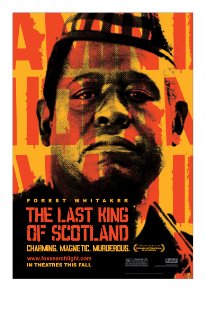
The Last King of Scotland

The Last King of Scotland, Ethnikka blog for cultural knowledge
FILM REVIEW
Title: The Last King of Scotland
Year: 2006
Director: Kevin Macdonald
Writer: Peter Morgan, Jeremy Brock, Giles Foden
Running time: 121 minutes  
Country: UK
Plot summary:
In an incredible twist of fate, a Scottish doctor (James McAvoy) on a Ugandan medical mission becomes irreversibly entangled with one of the world's most barbaric figures: Idi Amin (Forest Whitaker). Impressed by Dr. Garrigan's brazen attitude in a moment of crisis, the newly self-appointed Ugandan President Amin hand picks him as his personal physician and closest confidante. Though Garrigan is at first flattered and fascinated by his new position, he soon awakens to Amin's savagery - and his own complicity in it. Horror and betrayal ensue as Garrigan tries to right his wrongs and escape Uganda alive.

© Text and image: Wikipedia and IMDB

8 January 2012

The Al-Sirah Al-Hilaliyyah Epic

Hilali epic, Ethnikka blog for cultural knowledge
UNESCO CULTURAL HERITAGE  
This oral poem, also known as the Hilali epic, recounts the saga of the Bani Hilal Bedouin tribe and its migration from the Arabian Peninsula to North Africa in the tenth century. This tribe held sway over a vast territory in central North Africa for more than a century before being annihilated by Moroccan rivals. As one of the major epic poems that developed within the Arabic folk tradition, the Hilali is the only epic still performed in its integral musical form. Moreover, once widespread throughout the Middle East, it has disappeared from everywhere except Egypt.
Since the fourteenth century, the Hilali epic has been performed by poets who sing the verses while playing a percussion instrument or a two-string spike fiddle (rabab). Performances take place at weddings, circumcision ceremonies and private gatherings, and may last for days. In the past, practitioners were trained within family circles and performed the epic as their only means of income. These professional poets began their ten-year apprenticeships at the age of five. To this day, students undergo special training to develop memory skills and to master their instruments. Nowadays, they must also learn to inject improvisational commentary in order to render plots more relevant to contemporary audiences.
The number of performers of the Hilali Epic is dwindling due to competition from contemporary media and to the decreasing number of young people able to commit to the rigorous training process. Pressured by the lucrative Egyptian tourist industry, poets tend to forsake the full Hilali repertory in favour of brief passages performed as part of folklore shows.
Inscribed in 2008 on the Representative List of the Intangible Cultural Heritage of Humanity (originally proclaimed in 2003).

© Text: UNESCO, Image: Cultnat

27 December 2011

Art of the Dogon

The Art of The Dogon, ETHNIKKA blog for human cultural knowledge
BOOK REVIEW 
Title: Art of the Dogon 
Author: Jan Baptist Bedaux 
Year of publication: 2012 
Paperback: 368 pages 
Language: English 
Synopsis(Some information by the author himself): 
My name is Jan Baptist Bedaux and I would like to tell you something about my new book  Art of the Dogon. A private collection of Dogon material culture, Bedaux Art Editions, Brussels 2012, 368 pp, 745 ills. in full colour, hard cover 30 x 30 cm, ISBN/EAN 978-90-818531-0-, that will appear in January 2012.
In the summer of 1975 I had my first encounter with the cultures of the Dogon and Tellem. This was at Utrecht University’s Institute for Human Biology, whose exhibition represented over ten years’ research by the institute’s staff in the Republic of Mali in the area where the Dogon live and before them the Tellem.
The exhibition showed a wealth of items that had been placed in the caves as grave gifts for the Tellem dead – artefacts that were a constant inspiration to me when I founded my collection. In the same year, I acquired my first Tellem neckrests, which were included two years later in the Tellem exhibition in the Afrika Museum in Berg en Dal. These were soon followed by the first statues, which I bought in Paris from Michel Huguenin, Félicia Dialossin and Robert Duperrier.
My 35 years of collecting since then have created a collection that gives a broad view of the material culture of the Dogon and Tellem.
In my view, the value of the collection lies not just in its breadth, but also in the sheer variety of items. For, when compiling it, I was always guided by my ongoing fascination with the wide diversities within the Tellem and Dogon cultures.
The book contains 745 illustrations and descriptions of 650 objects spread over 368 pages. The cost is 95 € (without shipping).
Almost none of the items were ever published before. I am sure the collection will surprise you.
For a taste of Art of the Dogon click here (pdf).
As a bonus you get a signed copy when you buy through the website www.bedauxart.nl
©Text: Bedaux Art

17 December 2011

Hotel Rwanda

FILM REVIEW 
Title: Hotel Rwanda 
Year: 2004 
Director: Terry George 
Writer: Keir Pearson and Terry George 
Running time: 121 minutes   
Country: USA, UK, Italy, South Africa 
Plot summary: 
The true-life story of Paul Rusesabagina, a hotel manager who housed over a thousand Tutsi refugees during their struggle against the Hutu militia in Rwanda. Ten years ago some of the worst atrocities in the history of mankind took place in the country of Rwanda--and in an era of high-speed communication and round the clock news, the events went almost unnoticed by the rest of the world. In only three months, one million people were brutally murdered. In the face of these unspeakable actions, inspired by his love for his family, an ordinary man summons extraordinary courage to save the lives of over a thousand helpless refugees, by granting them shelter in the hotel he manages.

© Text and image: Wikipedia and IMDB

3 December 2011

N'Diangane

FILM REVIEW 
Title: N'Diangane 
Year: 1974 
Director: Mahama Traoré 
Writer: Mahama Traoré 
Running time: 100 minutes   
Country: Senegal, France 
Plot summary:
Mame is six years old child, living happily at home with his parents and playing in the fields, forests and nearby rivers with friends. Loved and well fed, he leads an idyllic life. In one fateful decision, all that changes.

© Text and image: Wikipedia and IMDB

5 November 2011

Mead Film Festival 2011

Name: 35th Margaret Mead Film Festival
Dates: 10th to 13th November 2011
Entrance fee: Ticket fees per film
Place: Entrance for screenings is on 77th Street between Central Park West and Columbus Avenue, New York
Commentary:
The Mead showcases the best in non-narrative filmmaking, encompassing a broad spectrum of work including international documentaries, experimental films, animation, hybrid works, and more.
The Festival presents documentaries that increase our understanding of the complexity and diversity of the peoples and cultures that populate our planet.
The Margaret Mead Film Festival is the longest-running, premiere showcase for international documentaries in the United States, encompassing a broad spectrum of work, from indigenous community media to experimental nonfiction. The Festival is distinguished by its outstanding selection of titles, which tackle diverse and challenging subjects, representing a range of issues and perspectives, and by the forums for discussion with filmmakers and speakers.

Opening Night with Grande Hotel (directed by Lotte Stoops)
The Grande Hotel in the East African seaside town of Beira, Mozambique, was once the most opulent resort on the continent. Now, it is home to an estimated 3,000 squatters. Living in this shell of former luxury, those on the margins of society create a self-enclosed community as the place they call home crumbles around them. As one voice in the film says, the history of the hotel is the history of the country itself.


About the Mead Film Festival:


1 November 2011

Arts Premiers auction at Prunier

Auction: Arts Premiers auction
Date: 6th November 2011 14:00h
Preview: 5th November 10-12h and 14-18h, 6th November 10-12h
Place: Hôtel des ventes de Louviers, 28 rue Pierre Mendès, Louviers (France)
Contact:  Jean-Emmanuel Prunier (info@prunierauction.com)
Comments:
The auction will be held by Jean-Emmanuel Prunier

© Photo and text: Jean-Emmanuel Prunier

26 October 2011

Sir Wilfred Thesiger

EXPLORERS OF THE WORLD 
Sir Wilfred Thesiger (1910 – 2003) 
Sir Wilfred Patrick Thesiger, CBE, DSO, FRAS, FRGS (3 June 1910 – August 24, 2003) was a British explorer and travel writer born in Addis Ababa, the capital of Ethiopia.

Thesiger was educated at Eton College and Magdalen College, Oxford University where he took a third in history. Between 1930 and 1933, Thesiger represented Oxford at boxing and later (1933) became captain of the Oxford boxing team.
In 1930, Thesiger returned to Africa, having received a personal invitation by Emperor Haile Selassie to attend his coronation. He returned again in 1933 in an expedition, funded in part by the Royal Geographical Society, to explore the course of the Awash River. During this expedition, he became the first European to enter the Aussa Sultanate and visit Lake Abbe.
Afterwards, in 1935, Thesiger joined the Sudan Political Service stationed in Darfur and the Upper Nile. He served in several desert campaigns with the Sudan Defence Force (SDF) and the Special Air Service (SAS) with the rank of major.
In World War II, Thesiger fought with Gideon Force in Ethiopia during the East African Campaign. He was awarded the DSO[1] for capturing Agibar and its garrison of 2500 Italian troops. Afterwards, Thesiger served in the Long Range Desert Group during the North African Campaign.
There is a rare wartime photograph of Thesiger in this period. He appears in a well-known photograph usually used to illustrate the badge of the Greek Sacred Squadron. It is usually captioned 'a Greek officer of the Sacred Band briefing British troops'. The officer is recognisably the famous Tsigantes and one of the crowd is recognisably Thesiger. Thesiger is the tall figure with the distinct nasal profile. Characteristically, he is in Arab headdress. Thesiger was the liaison officer to the Greek Squadron.
In 1945, Thesiger worked in Arabia with the Desert Locusts Research Organisation. Meanwhile, from 1945 to 1949, he explored the southern regions of the Arabian peninsula and twice crossed the Empty Quarter. His travels also took him to Iraq, Persia (now Iran), Kurdistan, French West Africa, Pakistan and Kenya. He returned to England in the 1990s and was knighted in 1995.
Thesiger is best known for two travel books. Arabian Sands (1959) recounts his travels in the Empty Quarter of Arabia between 1945 and 1950 and describes the vanishing way of life of the Bedouins. The Marsh Arabs (1964) is an account of the Madan, the indigenous people of the marshlands of southern Iraq. The latter journey is also covered by his travelling companion, Gavin Maxwell, in A Reed Shaken by the Wind — a Journey through the Unexplored Marshlands of Iraq (Longman, 1959).
Thesiger took many photographs during his travels and donated his vast collection of 23,000 negatives to the Pitt Rivers Museum, Oxford.

Obituary from The Guardian, August 27th 2003
Explorer whose mystic vision rejected the modern technological world in favour of the tribes people of Africa and the Arabian deserts
Once, in 1946, Wilfred Thesiger lay starving on a sand dune in Arabia’s Empty Quarter for three days, waiting for his Bedu companions to bring back food, and tortured by hallucinations of cars and lorries that could carry him to safety. “No,” he wrote later, “I would rather be here starving as I was than sitting in a chair, replete with food, listening to the wireless and dependent on cars to take me through Arabia.” As an explorer, Thesiger, who has died aged 93, recognised that satisfaction in attaining a goal was directly in proportion to the hardship and challenge involved in getting there.

He reserved the word “abomination” for cars and aeroplanes, and all his life resented the intrusion of any innovation post-dating the steam engine. His mystical regard for tradition was a product both of his childhood in still-medieval Abyssinia and an intense pride in his aristocratic forebears, the Barons of Chelmsford.
Born in Addis Ababa, where his father was British minister, he grew up in the barbaric splendour of an imperial court, and was privileged to see a victorious and blooded Abyssinian army marching through the city in the full panoply of war. It was an experience he never forgot.
Daydreams of Africa and the wider world were his means of escape throughout his awkward and often unhappy schooldays at St Aubyn’s school, Rottingdean, in Sussex (1919-23), Eton College (1923-28), and his time reading history at Magdalen College, Oxford (1929-33). During his first summer vacation from the university, he set off alone, working his passage on a tramp steamer to Istanbul and returning third-class by train.
So began the travels that he recorded in fine prose and black-and-white photography. On his return, he found both a personal invitation to attend the coronation of Emperor Haile Selassie of Abyssinia, and a note from the Foreign Office appointing him honorary attaché to the Duke of Gloucester for the event - where he met Evelyn Waugh, a writer of very different sympathies.
For his second vacation, he set himself another endurance test, a month with a Hull fishing trawler off Iceland. Here he learnt to withstand the need for sleep.
But Africa was his goal, and at the age of only 23 he went to explore Abyssinia’s Awash River and the forbidding Aussa sultanate with its Danakil nomads, chiefly noted for a disturbing tendency to kill men and carry off their testicles as trophies. Such practices held little horror for Thesiger, who had survived fagging and flogging at Eton, and saw at least one young Afar man, flushed from the exertion of slaughtering and mutilating four victims in a day, as “the equivalent of a nice, rather self-conscious Etonian who had just won his school colours for cricket”.
Thesiger gained his own blue, for boxing at Oxford - when he captained the university team in 1933, a victory against Cambridge was marred by the breaking of his noble nose - and like many an athletically endowed young Oxbridge graduate of the 30s, he sought a career in the country where “blues” were said to rule “blacks”: the Sudan. As an assistant district commissioner in the Sudan political service from 1935 onwards, he served in arid Darfur, and later in the steaming swamps of the Sudd, where one of his chief jobs was shooting troublesome lions that attacked local herds.
It was in Darfur that he first learned to travel by fast-riding camel with local companions, dressing as they did, eating local food out of the same bowl, and asking nothing of technology but a good rifle, a torch and a compass. During one leave he completed a long and dangerous journey to the almost unknown Tibesti mountains in the Sahara, and fell in love with the desert: “I was exhilarated by the sense of space, the silence, and the crisp cleanness of the sand. I felt in harmony with the past, travelling as men had travelled for untold generations across the deserts, dependent for their survival on the endurance of their camels and their own inherited skills.”
During the war he was a bimbashi - the most junior officer rank - in the Sudan defence force. He won the DSO in 1941 for leadership under fire in fighting the Italians, under the idiosyncratic Orde Wingate in the liberation of Abyssinia. With a masterstroke of bluff, he subsequently forced the surrender of an Italian-held fort, taking 2,500 prisoners. He later fought as a major, as second in command of a Druze legion formed to fight the Vichy French in Syria - which enabled him to visit a deserted Petra. He also served with Colonel David Stirling’s Special Air Service (SAS) in north Africa. Following the defeat of the Afrika Korps in 1943, the SAS went to Palestine, and in October of that year Thesiger left the organisation to act as an adviser to Haile Selassie in Abyssinia.
A resulting chance meeting brought him a job in what became the UN’s Food and Agricultural Organisation’s anti-locust unit and the opportunity to make his most famous journeys in the deserts of Arabia under its aegis, between 1945 and 1949. Arabia’s legendary Empty Quarter had been the goal of all Arabian explorers from Richard Burton onward, and although Thesiger was not the first to cross it, he was the first to explore it thoroughly, mapping the oasis of Liwa and the quicksands of Umm As-Sammim. He crossed the desert twice with Bedu companions, and his trek across the western sands from the Hadhramaut to Abu Dhabi was the last and greatest expedition of Arabian travel.
During his journeys he was caught up in inter-tribal raids, pursued by hostile raiders, and arrested by the Saudi authorities. He travelled alone in the Hejaz, the Assir and Najran, and explored the Trucial Coast and Dhofar in southern Arabia. He lived with the canoe-borne marshmen of Iraq for several periods over the seven years up to the Iraqi revolution of 1958, attaining acceptance only by learning the unusual skill of circumcision.
He still found time to travel in Kurdistan, Hunza (north-east Pakistan), Swat, Chitral (both north-west Pakistan), and Nuristan (across the border in north-east Afghanistan), where in 1956, 16,600ft up in the high passes, he bumped into a dispirited Eric Newby and friend Hugh Carless, and invited them to spend the night with him. They got on well until Thesiger saw them blowing up inflatable air-beds before retiring. “You must be a couple of pansies!” he said.
He crisscrossed postwar Abyssinia, fought on the royalist side in the civil war in Yemen (1966-67), traversed most of northern Kenya, where he spent much time between 1968 and 1994, travelled with the Bakhtiari nomads in Iran, trekked across the burning plains of the Dasht-i-Lut, the Great Sand Desert of eastern Iran, and explored inner Afghanistan. All of these travels and many more - in total tens of thousands of miles - were made either on foot or by traditional transport, be it camel, horse, mule, donkey or canoe.
Thesiger felt least at home in his own culture and with his own kind. He resented the juggernaut of western “civilisation” and its inexorable movement to squash what he believed was the colour and diversity of the earth’s peoples. His sympathies were with the indigenes, and his closest human ties were with certain of them who were his companions on his many journeys - his Zaghawa servant in the Sudan, his Bedu companions in Arabia, his paddlers in Iraq and his Samburu family in Kenya. (”Sex has been of no consequence to me, and the celibacy of desert life left me untroubled. Marriage would certainly have been a crippling handicap.”) Few other explorers of the last century have tried so genuinely to see the world through the eyes of these foreign peoples. Yet much as he despised civilisation, Thesiger was never able to forsake completely his place in it.
Had he done so, he might never have left us his unique glimpses of strange worlds, in his classic books The Marsh Arabs (1964) and Desert, Marsh And Mountain (1979), his autobiography The Life Of My Choice (1987), his portfolio of superb monochrome photos, Visions Of A Nomad (1987), and above all his description of the traditional life of the Bedu, Arabian Sands (1959), probably the finest book ever written about Arabia and a tribute to a world now lost forever.
He won the founder’s medal of the Royal Geographical Society, together with three other medals from learned societies, honorary fellowships of Magdalen College, Oxford, and the British Academy, and an Honorary DLitt from Leicester University. In 1968, he was awarded a CBE, and in 1995 he was knighted.
Yet, far more than these many honours, he valued the friendship and confidence of the nomadic peoples with whom and among whom he travelled. Thesiger’s best years were the five he spent among the Bedu of South Arabia, and one cherished companion from those days, Salim bin Ghabeisha, when a greybeard in his 60s, remembered him: “He was loyal, generous, and afraid of nothing. He was a wonderful man to travel with.” Thesiger would, I am sure, ask no better epitaph.


Copyright: Wikipedia, Oxford University Exploration Club

18 October 2011

San Francisco Tribal Show 2011

SHOW 
Name: SAN FRANCISCO TRIBAL SHOW 2011 
Date: November 4-6, 2011 
Place: Fort Mason Building D, Fleet Room, San Francisco (USA) 
Webpage: www.sftribal.com 
Comments:
PREVIEW OPENING NIGHT
NOVEMBER 4 • 6pm - 9pm
sushi and champagne
$35 at the door

REGULAR SHOW HOURS
SATURDAY, NOVEMBER 5 • 11am - 7pm
SUNDAY, NOVEMBER 6 • 11am - 5pm
$10 entrance

History:
San Francisco Tribal is an association of tribal art dealers from the San Francisco Bay Area. The association is comprised of 13 experts in African art, Oceanic art, Asian art, pre-Columbian art and North American Indian art. The members offer a wide range of high quality sculpture, masks, textiles, ceramics, weapons, shields and jewelry from ancient and traditional cultures and are committed to a standard of excellence and professional conduct.
San Francisco Tribal member dealers guarantee the quality and authenticity of everything they sell. From pre-Columbian to tribal Asian, the dealers have sold important works of tribal art to renowned museums and private collections worldwide. San Francisco Tribal enhances accessibility to this important community and promotes the Bay Area as a major destination for collectors of fine tribal and textile art. To this end, San Francisco Tribal presents tribal art exhibits that showcase the diverse specialties of its members and maintains this website with information about the dealers and the works of art they have for sale.
Participating SFT dealers: Dave DeRoche, Erik Farrow, Joe Loux, Vicki Shiba,
Frank Wiggers, James Willis  
Guest Dealers: Peter-Michael Boyd, Taylor A. Dale, Joshua Dimondstein, Sandra Horn
and Ari Maswell, Mark Johnson, Lewis-Wara Gallery, K.R. Martindale


© Text and image: San Francisco Tribal Show 2011

8 October 2011

Tribe (Going Tribal)

TV SERIES REVIEW 
Title: Tribe (Going Tribal) 
Year: 2005 
Running time: 60 minutes each episode 
Country: UK 
Plot summary:
Tribe (known as Going Tribal in the United States) is a documentary television series co-produced by the BBC and the Discovery Channel, and hosted by former British Royal Marine Bruce Parry.
In each series, Parry visits a number of remote tribes in such locales as the Himalayas, Ethiopia, West Papua, Gabon and Mongolia, spending a month living and interacting with each society. While there, Parry adopts the methods and practices of his hosts, participating in their rituals and exploring their cultural norms. This often enables him to form personal bonds with the members of each tribe.
Parry tries to learn the basics of the tribe's language but is also accompanied by a translator.
The series is co-produced by BBC Wales and the Discovery Channel. A second series aired in July, 2006 and the third began on 21 August 2007 on BBC2, and ended on 25 September 2007.
Parry was awarded the BAFTA Cymru "Best On-Screen Presenter" award in 2008 for his work on the 'Penan' Episode. A BAFTA Cymru "Best Camera: Not Drama" award was also awarded for Gavin Searle's work in the same episode.

Tribe (Going Tribal) follows former Royal Marine and expedition leader Bruce Parry as he tests the physical limits of living with ancient tribes in some of the world's most remote areas.
Parry sheds social trappings (and sometimes his Western clothes) by living alongside people from the virtually unexplored areas of the Himalayas, Ethiopia, West Papua, Gabon and Mongolia. To the degree possible, while spending a month immersed in each society, Parry also tries to adopt the methods and practices of his hosts.
Parry enthusiastically embraces jungle hunting and the rituals of the warrior, being taught by strangers how to survive using bows, arrows, blowpipes, dogs, spears, traps, snares and clubs. He must cook and eat his catch using traditional methods such as hot stones, waxy leaves and bamboo pots.
Parry is accompanied by a translator, but learns the basics of tribal language. The series is accompanied by subtitles. Viewers hear unique languages and watch the sometimes-graphic practices of living and surviving in the jungle among some of the world's disappearing cultures.
Going Tribal is co-produced by the BBC Wales and the Discovery Channel.

Series 1
#          UK Title           US Title           Plot
1          Adi       Lost Tribe: The Adis   Travelling to north eastern India. The episode involves the sacrifice of a bull.
2          Suri     Dangerous Game: The Suri  Parry travelled to Ethiopia.
3          Kombai           Living with Cannibals Parry travelled to West Papua.
4          Babongo         African Vision Quest  Parry travelled to Gabon.
5          Darhad            Horse Masters of Mongolia    Parry travelled to Mongolia. He witnessed a shamanic ritual.
6          Sanema          Waking the Spirits      Parry travelled to Brazil. He took part in a ritual involving hallucinogenic drugs.

Series 2
#          UK Title           US Title           Plot
7          Nyangatom     Return to Africa          Parry returned to Ethiopia, to stay with the tribe who are sworn enemies of the Suri, whom Parry had met in the previous series.
8          Hamar Rites of Passage: The Hamar           Parry stayed in Ethiopia.
9          Dassanech     Crocodile Hunting       Parry again remained in Ethiopia.

Series 3
#          UK Title           US Title           Plot
10        Matis   Hunting with the Jaguar Tribe            Parry visited Brazil in South America.
11        Nenets            Nomads of the Siberian Tundra        Parry travelled to Russia.
12        Anuta   Lost Island of Anuta    Parry travelled to the Solomon Islands.
13        Akie     Life in the African Bush: The Akie      Parry travelled to Tanzania in Africa.
14        Layap  Journey to the Clouds: Bhutan          Parry travelled to Bhutan in Asia.
15        Penan Ghosts of the Forest  Parry travelled to Sarawak, Borneo.

About Bruce Parry:
Commissioned by the British Royal Marines in May 1988, Bruce Parry completed one year of management, leadership and commando training before spending several years as a troop commander.
In the Royal Marines, Parry specialized as a physical training instructor and became the youngest officer ever to be in charge of all physical aspects of Royal Marines commando training. He also served in Norway and Iraq before retiring as a lieutenant after six years of service.
As an expeditioner, the 35-year-old resident of England has personally organized and led more than 15 major expeditions to extreme parts of the world. Parry has extensive remote experience in the desert, arctic, jungle and mountains.
In film and television productions, Parry has worked as a location manager, assistant director, camera operator, director and host.
In addition, Parry hosted BBC's Extreme Lives: Cannibals and Crampons, the award-winning film about his journey into the heart of Irian Jaya, and he has recently appeared in an award-winning kids' series called Serious Jungle.

© Text and image: Discovery Channel, BBC

6 October 2011

The Himba of Namibia

Himba woman, Ethnikka blog for Human Cultures
Name: Himba or Ovahimba
Living Area: Kunene region of Namibia (Africa)
Population: 20.000 – 50.000 people
Language: Otjihimba (a dialect of the Herero language)
Comments:   
The Himba are an ethnic group of about 20,000 to 50,000 people living in northern Namibia, in the Kunene region (formerly Kaokoland). Recently they have built two villages in Kamanjab which have become tourist destinations. They are mostly a nomadic, pastoral people, closely related to the Herero.

The Himba breed cattle and goats. The responsibility for milking the cows and children lies with the women. Women tend to perform more labor-intensive work than men do, such as carrying water to the village and building homes. Men handle the political tasks and legal trials.
Members of an extended family typically dwell in a homestead, "a small, circular hamlet of huts and work shelters" that surrounds "an okuruwo (ancestral fire) and a central livestock enclosure." Both the fire and the livestock are closely tied to their belief in ancestor worship, the fire representing ancestral protection and the livestock allowing "proper relations between human and ancestor."
Boys are generally circumcised before puberty, to make them eligible for marriage.
Because of the harsh desert climate in the region where they live and their seclusion from outside influences, the Himba have managed to maintain much of their traditional lifestyle. Members live under a tribal structure based on bilateral descent that helps them live in one of the most extreme environments on earth.
Under bilateral descent, every tribe member belongs to two clans, one through the father (a patriclan, called oruzo) and another through the mother (a matriclan, called eanda). Himba clans are led by the eldest male in the clan. Sons live with their father's clan and when daughters marry they go to live with the clan of their husband. However, inheritance of wealth does not follow the patriclan but is determined by the matriclan, i.e. a son does not inherit his father's cattle but his maternal uncle's instead.
Bilateral descent is found among only a few groups in West Africa, India, Australia, Melanesia and Polynesia and anthropologists consider the system advantageous for groups that live in extreme environments because it allows individuals to rely on two sets of families dispersed over a wide area.
The Himba's history is wrought with disasters, including severe droughts and guerrilla warfare, especially during Namibia's quest for independence and as a result of the civil war in neighboring Angola. In 1904, they suffered from the same attempt at genocide by the German colonial power under Lothar von Trotha that decimated other groups in Namibia, notably the Herero and the Nama.
In the 1980s, the Himba way of life was coming to a close. A severe drought killed ninety percent of their cattle and many gave up their herds and became refugees in the town of Opuwo living in slums on international relief. Since they live on the Angolan border, many Himba were also kidnapping victims in the Angolan civil war.
Since the 1990s, the Himba have been successful in maintaining control of their lands and have experienced a resurgence. Many Himba now live on nature conservancies that give them control of wildlife and tourism on their lands. They have worked with international activists to block a proposed hydroelectric dam along the Kunene River that would have flooded their ancestral lands.
The Himba are a monotheistic people who worship the god Mukuru. Each family has its own ancestral fire, which is kept by the fire-keeper. The fire-keeper approaches the ancestral fire every seven to eight days in order to communicate with Mukuru and the ancestors on behalf of his family. Often, because Mukuru is busy in a distant realm, the ancestors act as Mukuru's representatives. However, the difference between Mukuru and the ancestors is that while Mukuru only blesses and never curses; the ancestors do both.
The Himba traditionally believe in omiti, which is often translated as witchcraft. Some Himba believe that death is caused by omiti, or rather, by someone using omiti for malicious purposes. Additionally, some believe that evil people who use omiti have the power to place bad thoughts into another's mind or cause extraordinary events to happen (such as when a common illness becomes life-threatening). Some Himba will consult a diviner to reveal the reason behind an extraordinary event, or the source of the omiti.
Several researchers studied the Himba color perception. The Himba use four color names: Zuzu stands for dark shades of blue, red, green and purple; Vapa is white and some shades of yellow; Buru is some shades of green and blue; and Dambu is some other shades of green, red and brown.
The Himba color judgment is deeply affected by this classification. They find it difficult or even impossible to distinguish between colors that go under the same name in their system, while differentiating easily and immediately between close shades of color that they categorize under different names. This fascinating phenomenon is often said to demonstrate the deep effect language has over the perception of reality. So far the research does not rule out a genetic basis.

Known by their: women’s ornaments
The Himba, especially the women, are noted for their unusual beauty, enhanced by intricate hairstyles and traditional adornments.
The Himba wear little clothing, but the women are famous for covering themselves with otjize, a mixture of butter fat and ochre, possibly to protect themselves from the sun. The mixture gives their skins a reddish tinge. This symbolizes earth's rich red color and the blood that symbolizes life, and is consistent with the Himba ideal of beauty. Women braid each other's hair and cover it in their ochre mixture.
Traditionally both men and women go topless and wear skirts or loincloths made of animal skins in various colors. Adult women wear beaded anklets to protect their legs from venomous animal bites.


© Text and image: Wikipedia